
Rehabilitation after a knee replacement focuses on three goals: full straightening of the knee, regaining bending – getting up easily and climbing stairs usually requires approx. 90–110° – and controlling swelling while rebuilding thigh strength. It goes in stages from hospital to a return to activity, always in line with the surgeon’s recommendations. The pace is set by the doctor in charge together with the physiotherapist.
Below we describe the stages of rehabilitation without a rigid calendar, symptoms that need urgent contact with a doctor, why range of motion matters, 5 exercises with dosage, ways of dealing with swelling and the most common mistakes.
In brief
- Getting up from a chair and climbing stairs usually requires approx. 90–110° of knee bending.
- Do not put a pillow under the operated knee – it reinforces the lack of straightening.
- Calf pain and swelling, fever or discharge from the wound need urgent contact with a doctor; shortness of breath – call 112.
- Home physiotherapy: approx. PLN 200 within 5 km, then + PLN 2/km, up to 15 km from Rydułtowy; the exact price is agreed when booking.
- The clinic in Rydułtowy is open Mon–Fri 7:00–20:00, private visits only (not covered by NFZ, the Polish public health fund).
Contents
What does rehabilitation after a knee replacement look like?
Rehabilitation usually starts in hospital, in the first days after the operation: with exercises in bed, getting upright and walking on crutches. After discharge, the priorities are straightening and bending the knee and reducing swelling. Next comes rebuilding the strength of the quadriceps muscle, walking without crutches and climbing stairs, and finally returning to work, walks and leisure.
| Stage | Main goals | Who decides on moving on |
|---|---|---|
| 1. Hospital | getting upright, walking on crutches, first bending and straightening exercises | hospital team |
| 2. Early stage at home | straightening, bending, swelling control, independence | surgeon and physiotherapist |
| 3. Restoring function | thigh strength, walking without crutches, stairs, balance | surgeon and physiotherapist |
| 4. Return to activity | work, longer walks, cycling, swimming | surgeon and physiotherapist |
After a replacement, the knee usually regains function more slowly than the hip, and swelling and a feeling of stiffness can last a long time. The pace depends on age, strength before the operation and other conditions.
When should you see a doctor urgently after a knee replacement?
Urgent contact with a doctor is needed for: fever, redness, warmth or discharge from the wound, suddenly increasing knee pain and swelling, one-sided calf pain and swelling, and a fall after which you cannot put weight on the leg. Shortness of breath, chest pain or coughing up blood may indicate a pulmonary embolism and require calling 112 immediately.
Warning signs:
- signs of infection: fever, chills, discharge or the wound opening;
- signs of thrombosis: pain, swelling and warmth in the calf;
- rapidly increasing stiffness despite exercises – worth reporting to the surgeon at the next opportunity;
- new numbness in the foot or weakness in lifting it;
- shortness of breath and chest pain – call 112.
Why are straightening and bending the knee so important?
Full straightening is needed for a normal walking pattern – a knee that does not straighten causes limping and overloads the other leg. Bending determines everyday independence: getting up from a chair and climbing stairs usually requires approx. 90–110°, and cycling a little more. It is worth working on range of motion every day, within the surgeon’s recommendations.
A lack of progress in bending or straightening is worth reporting to the physiotherapist and the surgeon, because if stiffness persists the doctor may consider further management. The physiotherapist measures range of motion with a goniometer, so progress can be seen in numbers.
Which exercises can you do after a knee replacement?
In the early stage, exercises that improve circulation, tightening the quadriceps muscle, straight leg raises and knee bending and straightening exercises are usually safe. Do the 5 exercises below only if the surgeon or the hospital physiotherapist has not advised otherwise. Mild pain during bending exercises is typical, but it should not get worse from day to day.
- Ankle pumps. Lying down, bend and straighten your feet. 15–20 repetitions, every 1–2 hours during the day.
- Knee presses. Lying with your leg straight, press the back of the knee into the bed by tightening your thigh. 10 contractions of 5 seconds, 3 times a day.
- Straight leg raise. Lying down with the healthy leg bent, tighten the thigh of the operated leg and lift it, straight, by approx. 20–30 cm. 10 repetitions, 2 sets, twice a day.
- Seated knee bending. Sitting on a chair, slide the foot of the operated leg under the chair until you feel a stretch, and hold. 10 repetitions with a 5-second hold, 3 times a day.
- Seated straightening. Sitting, rest your heel on a stool so that the knee is unsupported, and let it straighten. 2–3 times a day for a few minutes, if it does not increase pain.
If the pain gets worse or spreads, stop the exercise and consult a physiotherapist.
How to deal with knee swelling and pain?
Swelling after a knee replacement is typical and can last a long time, especially in the evening and after greater exertion. It helps to raise the leg with the knee straight, use cooling as recommended by the hospital, do regular foot exercises and spread activity throughout the day. Take painkillers as recommended by your doctor, so that pain does not prevent you from exercising.
If swelling persists, the physiotherapist may suggest lymphatic drainage, after agreeing it with the doctor and once the wound has healed.
What does rehabilitation at home and at the clinic look like?
After discharge, when walking is still difficult, a physiotherapist can come to your home to lead range-of-motion exercises and practise walking and climbing stairs. Later, therapy can continue at the clinic in Rydułtowy, where it is easier to train strength and balance. Home physiotherapy costs approx. PLN 200 within 5 km, then PLN 2/km, and the exact price is agreed when booking.
At the clinic, once the wound has healed and with the surgeon’s consent, the physiotherapist may use manual therapy – including mobilisation of the kneecap and the scar. When choosing physical therapy modalities, they take the metal implant into account. The number of visits is set individually. How to prepare your home is described in our post how to prepare your home for home physiotherapy.
Home physiotherapyafter discharge from hospital, up to 15 km from Rydułtowyapprox. PLN 200 within 5 km, then + PLN 2/km; the exact price is agreed when booking Manual therapymobilisation of the kneecap, scar and tissues around the knee, with the surgeon's consent180 PLNPrices valid from 08.2026.
Which mistakes slow down recovery?
The most common mistakes are putting a pillow under the knee, which reinforces the lack of straightening, avoiding bending the knee for fear of pain, exercising irregularly and overdoing it so that swelling clearly increases afterwards. It is also a mistake to stop using crutches without the physiotherapist’s or doctor’s approval and to ignore calf pain, fever and changes in the appearance of the wound.
Good to know: for the first visit, bring your hospital discharge summary, the surgeon’s recommendations and information about any anticoagulant medication.
We describe knee pain before surgery in our post knee pain when going down stairs, and other topics in the guide joint pain and injuries.
Summary
After a knee replacement, the most important things are full straightening, the approx. 90–110° of bending needed in everyday life, swelling control and thigh strength. The pace of rehabilitation is set by the surgeon together with the physiotherapist. Home physiotherapy within 15 km of Rydułtowy costs approx. PLN 200 within 5 km, then PLN 2/km.
Frequently asked questions
When can I walk without crutches after a knee replacement?
The decision to stop using crutches is made by the surgeon or physiotherapist based on progress, not on the number of days since the operation. The criteria are usually walking without a limp, full straightening of the knee when standing on the leg, sufficient thigh strength and good balance. Usually you first move from two crutches to one, held on the healthy side.
Can I kneel after a knee replacement?
Some people can kneel after a knee replacement, but it can be uncomfortable because of the scar and altered skin sensation. It is worth agreeing with the surgeon when to make the first attempts. Kneeling on a soft cushion, and on the healthy knee first, helps. If kneeling causes severe pain, it is better to avoid it.
Can I cycle after a knee replacement?
Yes, a stationary bike is often recommended in the later stages of rehabilitation, as it improves bending and strength without putting much load on the joint. However, it requires a sufficient range of knee bending. At first, a higher saddle position helps. Cycling outdoors is worth agreeing with the surgeon because of the risk of falling.
Why does the knee stay warm and swollen for a long time after a replacement?
Warmth and swelling of the knee are a natural part of tissue healing after major surgery and can last a long time, especially after exertion. However, a sudden increase in warmth, redness, fever, discharge from the wound or severe pain are worrying. In such a situation, contact a doctor urgently.
Do I need a referral for rehabilitation after a knee replacement?
A referral is usually not required for private rehabilitation at the “W zdrowym ciele” clinic or at home. The clinic has no contract with the NFZ (the Polish public health fund), so visits are paid, and a consultation at the clinic costs PLN 180. You will need your hospital discharge summary with the surgeon’s recommendations on weight-bearing and exercises.
At what times can I book rehabilitation?
The clinic at ul. Strzelców Bytomskich 11 in Rydułtowy is open Monday to Friday, 7:00–20:00. A visit at the clinic or home physiotherapy can be booked via Booksy or by phone on 505 417 624. A home visit costs approx. PLN 200 within 5 km, then PLN 2/km; the exact price is agreed when booking.
Sources
- NICE, Joint replacement (primary): hip, knee and shoulder (NG157), 2020.
- Jette D.U. et al., Physical Therapist Management of Total Knee Arthroplasty. Clinical Practice Guideline, Physical Therapy, 2020.
- Recommendations of the centre where the operation was performed (given to the patient on discharge).
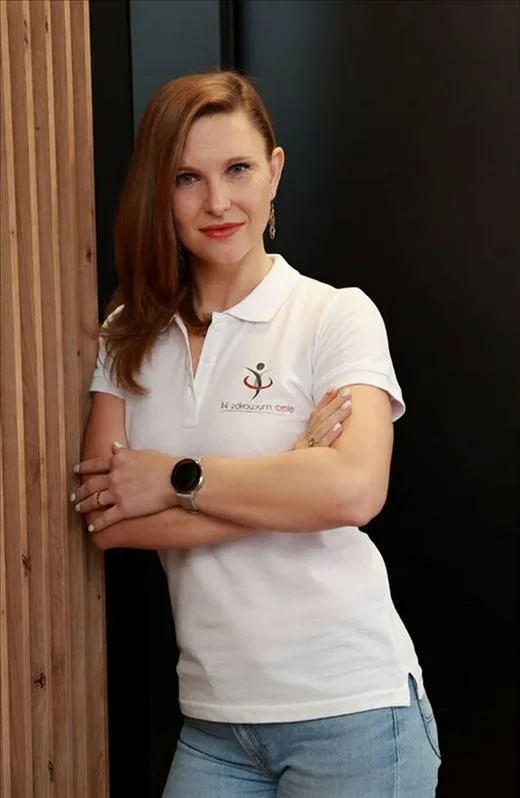
About the author: Tatiana Grabowska, MSc – master’s degree in physiotherapy, licence to practise number PWZFz 11646 (Polish physiotherapist licence). Since 2013 she has run the “W zdrowym ciele” physiotherapy and rehabilitation clinic in Rydułtowy; she has about 12 years of professional experience. Physiotherapist’s profile
- Consultation180 PLN
- Referralnot needed
- ReceptionMon–Fri: 7.00–20.00